
Why Water Purifiers Matter Most
Their Vital Role (With Air Purifiers) in Fighting Environment-Related Diseases
The Growing Threat: How Environmental Degradation Endangers Our Basic Health
Fresh air and clean drinking water are natural cornerstones of human health. They are also essential for human survival, yet increasingly threatened.As human society develops, the global population continues to grow. This growth and development cause mounting environmental damage.Since the Industrial Revolution, industry has expanded rapidly worldwide. This expansion leads to reckless discharge of industrial wastewater. Industrial exhaust gases are also released without proper control.These pollutants severely harm the air we breathe every day. They also damage the clean drinking water we rely on to survive.Such environmental degradation harms our precious ecosystems. It also raises the risk of environment-related illnesses.This makes water and air purifiers critical for protecting human health.
Rising Awareness: The Demand for Purifiers Grows
Water and air pollution pose a grave threat to human survival. More people are noticing the worsening environmental pollution crisis. They are starting to prioritize drinking water safety and respiratory health. In response to these concerns, water and air purifiers have emerged.
Rising Awareness: The Demand for Purifiers Grows
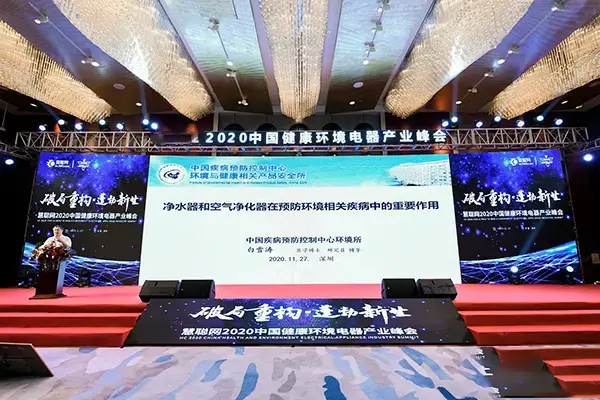
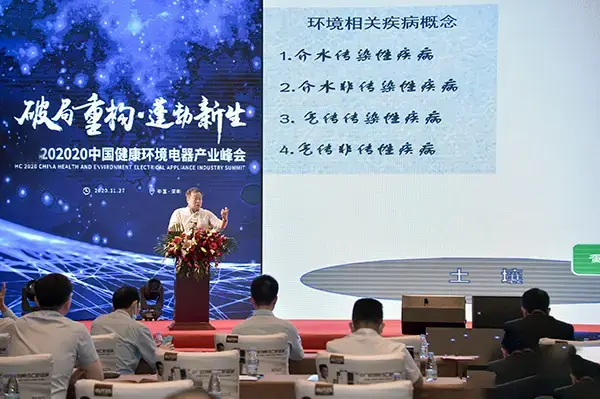
The China Healthy Environment Appliances Industry Summit was held on 27 Nov 2020. It took place at InterContinental Resort Shenzhen Dameisha grandly. Over 100 leading enterprise executives attended the significant event. Technical experts and industry specialists from across the nation were present. Nearly 200 premium distributors and agents also gathered here. All attendees came to witness this important industry gathering. Mr Bai Xue Tao delivered a keynote address at the summit. He is the former Deputy Director of a CDC-related institute. The institute focuses on environmental and health-related product safety. His speech was titled about purifiers and environment-related diseases. He comprehensively analyzed hazards of water and air pollution. These pollutants pose risks to people’s daily lives and health.

Dr Bai Xuetao, former Deputy Director of the Institute of Environmental Health, Chinese Centre for Disease Control and Prevention
Water Pollution: Severe Risks to Human Health
Water pollution degrades aquatic environments significantly. It diminishes the quality of drinking water sources. This degradation poses a direct threat to human health. Consuming contaminated water causes acute poisoning. It can also lead to chronic poisoning over time. Contaminated water may result in carcinogenesis or infectious diseases. It can even trigger other unusual health ailments. Industrial wastewater contains harmful pollutants like mercury. Lead and arsenic are also common in such wastewater. These pollutants can inflict fatal harm on humans. Contaminants come in chemical, biological or physical forms. They infiltrate drinking water through various pathways. This infiltration causes significant health damage. 80% of diseases are linked to water pollution. These include cardiovascular disorders and kidney stones. Liver cancer and stomach cancer are also associated. Childhood mortality often relates to water pollution. Intestinal infectious diseases tie to it as well.
Scientific Water Purification: Balancing Safety & Nutrition
Mr Bai Xuetao pointed out water pollution harms human health. People use water purifiers to remove or control contaminants. They aim to make water safe for drinking and health. This ensures pollutants do not damage health via water. Meanwhile, we must protect drinking water safety. We should fully utilise beneficial minerals in water. We need to adopt rational and scientific drinking methods. This approach helps prevent diseases and boost health.
A high-quality water purification system serves as a guardian of drinking water safety. It effectively filters out rust, silt, and colloidal particles from water, while adsorbing residual chlorine, odours, discolouration, and chemical agents such as pesticides. It removes heavy metals, bacteria, and viruses, enhances the taste of water, and safeguards drinking water safety.
The Importance of Respiratory Safety
Air Purifiers: Effective Tools to Improve Indoor Air Quality
Air purifiers have many other names like air cleaners. They are also called air fresheners or simply purifiers. Their primary function is to remove air particulate matter. This includes allergens and indoor PM2.5 particles. They address air pollution from indoor VOCs as well. VOCs come from renovation works and other sources. These pollutants exist in indoor, underground and vehicle spaces. Pollutant release in enclosed spaces is persistent. It is also unpredictable in relatively enclosed areas. Using air purifiers cleans indoor air effectively. This method is internationally recognized for better air quality. It is one of the most effective ways to improve indoor air.
Air Pollution: A Severe Threat to Human Life & Health
Beyond water pollution, air pollution impacts life quality. It causes airborne contamination in daily environments. Air pollution increases overall disease incidence rates. WHO released a report on air pollution and child health. The report is titled Air Pollution and Child Health: Clean Air is a Good Policy. About 93% of children under 15 breathe severely polluted air. This equals 1.8 billion children worldwide each day. Polluted air threatens their health and development gravely. WHO estimates data from the year 2016. 600,000 children died from acute lower respiratory infections. These infections were caused by polluted air exposure.
However, compared to air pollution in natural environments, indoor air pollution is significantly more severe. This is because modern individuals spend approximately 70% of their lifetime indoors, including time spent in vehicles. For urban residents, this indoor time extends even further, reaching 70% to 90% of their lives. Moreover, indoor air pollution levels are 2 to 5 times more severe than outdoor air pollution. Consequently, indoor air pollution has become an invisible threat to human health. Eliminating indoor air pollution and enhancing physical wellbeing has become an urgent and pressing matter.
Mr Bai’s View: Purifiers to Become Essential Household Items
Mr Bai Xue Tao shared his views on purifiers’ future role. Water purifiers remove contaminants specifically from drinking water. Air purifiers target and eliminate air-borne contaminants. Both products help enhance people’s overall quality of life. Purifiers will shift from discretionary to essential purchases gradually. Consumer demands for home appliances are constantly evolving. This is driven by consumption pattern structural upgrades. People’s health awareness has also been heightened. Meanwhile, the pandemic’s intensification brings new changes. It will push both purification sectors to new breakthroughs.