
—— From Parameters to Scenarios, Manufacturers Teach You to Choose the Right Core Components
With the rapid development of the water purification industry, the market demand for water purifier pumps continues to rise. According to the “2025 China Water Purification Equipment Industry Report,” the domestic market size of water purifier pumps exceeded 1.8 billion yuan in 2024. However, the market is flooded with mixed products, with frequent problems such as unqualified products, false parameter marking, and poor adaptability. Many water purification equipment manufacturers easily fall into pitfalls when selecting models, which not only affects product performance but also may increase after-sales costs.
As a professional water purifier pump manufacturer, we have compiled this practical selection guide based on years of industry experience and production practice. From three dimensions—core parameters, scenario adaptation, and quality judgment—we help you avoid selection misunderstandings and choose a suitable, durable, and efficient water purifier pump to maximize the performance of your water purification equipment.
Our Company Provides High-Quality Water Purifier Pumps for Stable and Efficient Water Purification Solutions
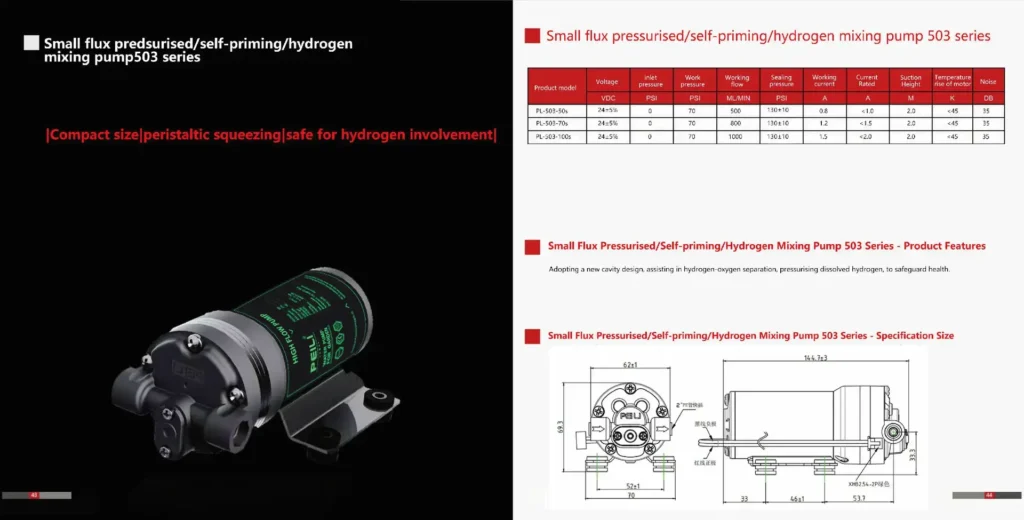
Our products 503 series
First, clarify core parameters and reject false marking. The core parameters of a water purifier pump directly determine its performance.
Focus on these 5 key points:
1. Flow rate: Select based on the water production needs of your purification equipment; household models are usually 1-5 m³/h, while commercial and industrial models can reach over 50 m³/h.
2. Head: A key consideration for reverse osmosis water purifiers; we recommend models with a head of 5-100 m to meet pre-membrane pressure requirements.
3. Material: Prioritize food-grade 304/316 stainless steel or engineering plastics that meet hygiene standards to avoid heavy metal leaching and water pollution.
4. Noise: For household scenarios, choose models with noise ≤ 55 dB; our products adopt shock absorption design + silent motors, with noise as low as below 52 dB.
5. Power: Match based on flow rate and head needs; household models have a power of 0.12-0.5 kW, while industrial models can reach over 5.5 kW.
Second, combine application scenarios to select the right model. Different water purification scenarios have significantly different requirements for water pumps; blind selection will lead to low efficiency and shortened service life. For household RO reverse osmosis water purifiers, prioritize low-noise, small-power models with strong self-priming capacity, suitable for low-pressure scenarios like old houses and rural areas. Our 24V DC self-priming pump, with a flow rate ≥ 1000 ml/min, zero-pressure self-priming, and easy installation, is an ideal choice for households. For commercial direct drinking machines and community water stations, select multi-stage pumps with large flow rates, stable heads, and strong corrosion resistance to ensure continuous water supply. For industrial pure water systems, focus on high-power, high-head models with corrosion-resistant materials, and we can customize parameters to meet industrial needs. For low-pressure and zero-pressure scenarios, dual-impeller self-priming pumps are a must to solve insufficient self-priming capacity.
Finally, judge the manufacturer’s strength to avoid quality risks. The quality of the water purifier pump directly determines the stability of the water purification equipment, so choosing a regular manufacturer is crucial. To judge a manufacturer’s strength, focus on three points: 1. Qualification certification: Prioritize manufacturers that have passed ISO9001 quality system certification and whose products meet drinking water hygiene standards. 2. Production and R&D capabilities: Manufacturers with independent R&D teams, advanced production equipment, and comprehensive testing centers can provide more competitive products and customized services. 3. After-sales service: A complete after-sales system can reduce long-term maintenance costs. We provide 24-hour technical support, a 1-year quality guarantee, and lifelong maintenance services to respond to customer needs quickly.
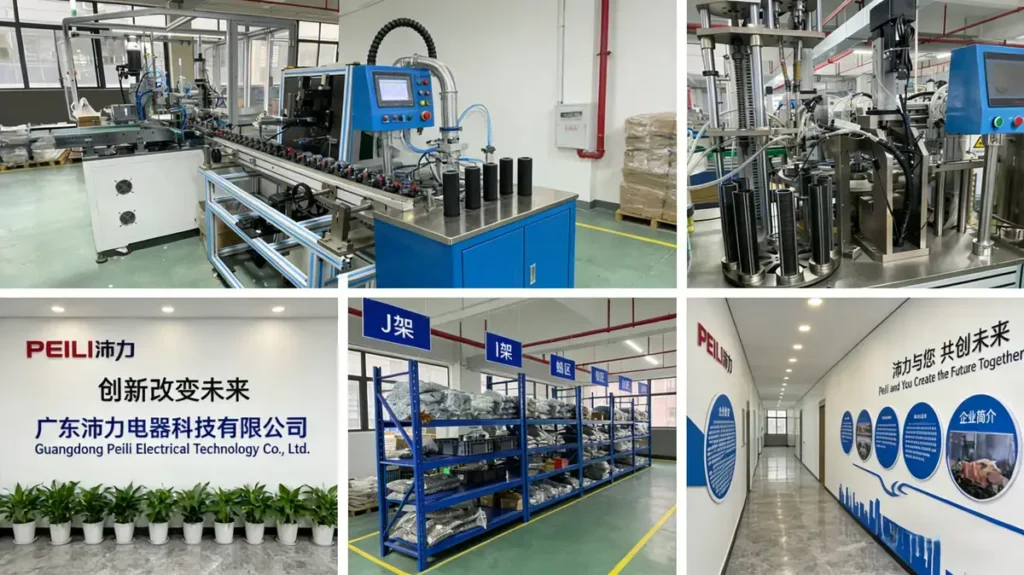
Workhouse and Office
In addition, daily maintenance also affects the service life of the water purifier pump. It is recommended to clean the water inlet filter every 3-6 months to prevent clogging by impurities. If the pump is out of service for a long time , drain the water inside and store it in a dry place. When abnormal noise or vibration occurs, stop the pump immediately for inspection to avoid motor damage caused by idling or overloading. Meanwhile, use original accessories when replacing parts to avoid affecting product performance and water quality.
As a source water purifier pump manufacturer, we not only provide high-quality, highly adaptable products but also offer full-process selection guidance and after-sales support. Whether it is a household, commercial, or industrial scenario, we can match you with the optimal water pump solution, rejecting false marking and inferior quality. With the advantages of a source factory, we help you reduce procurement costs and improve product competitiveness. If you have any questions about selection, please feel free to contact us, and our professional engineers will provide one-on-one answers.